I remember sitting in a meeting one time where one colleague dominated the whole conversation. He spoke with so much confidence—throwing big words here and there, explaining things like he had it all figured out. Everyone in the room nodded, impressed. But the funny thing? Behind the scenes, he wasn’t even the one doing the actual work. Meanwhile, a quieter teammate, who barely said a word during that meeting, was the one who built the solution that saved the project.
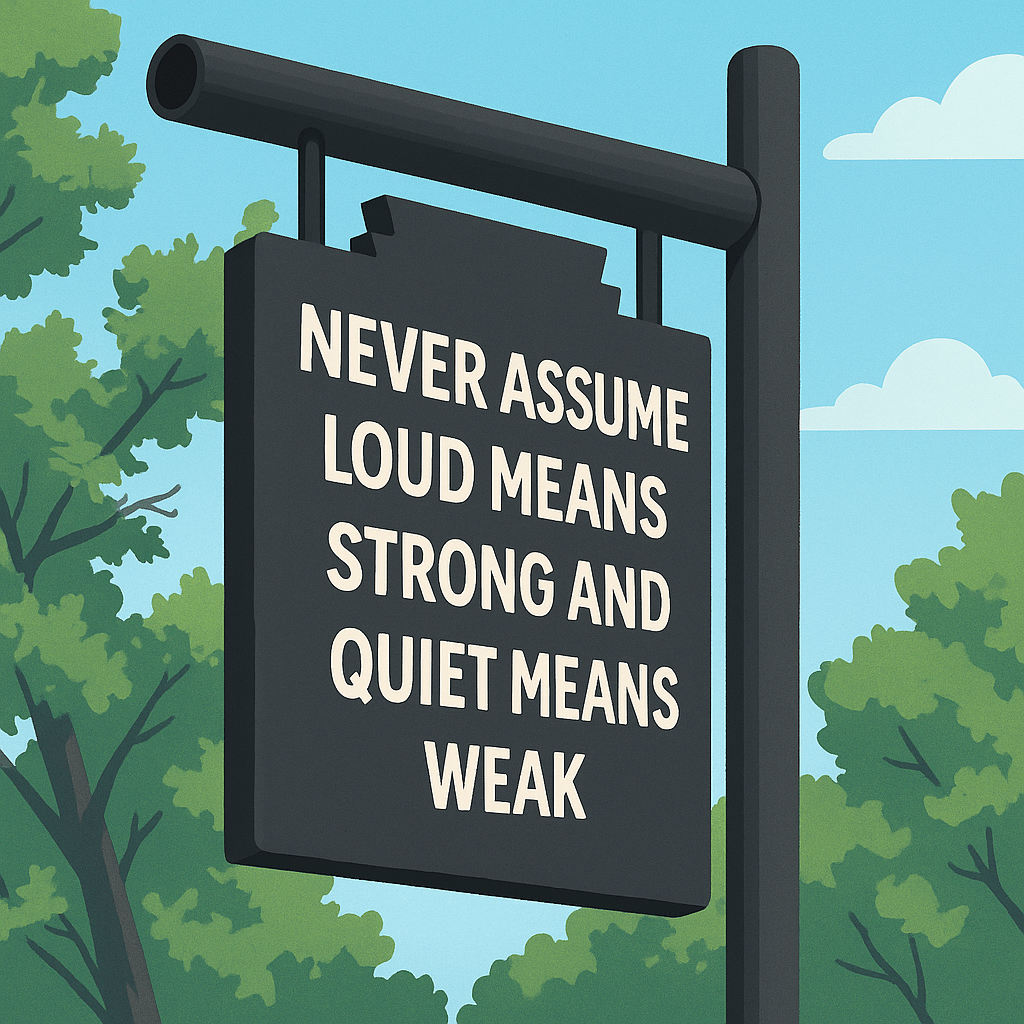
That moment stuck with me. And then recently, I stumbled upon a photo online that said: “Never assume loud means strong and quiet means weak.” It perfectly summed up what I’ve seen so many times in the workplace.
The Perception of Loud vs. Quiet
In many offices, the people who talk the most are often seen as leaders. They speak with confidence, they dominate discussions, and they shine in the spotlight. On the other hand, those who keep quiet are easily misjudged. Some people assume they’re weak, disengaged, or even clueless.
But is that really the case? Does silence mean weakness? Not at all.
Loud Without Action vs. Quiet With Results
Over the years, I’ve noticed how often this plays out. Some people are brilliant at talking—they know how to present themselves, how to be noticed, how to sound convincing. But when it’s time to deliver, it’s their teams who actually carry the weight.
Then there are the quiet ones. They don’t always speak up in meetings, but when you look at the work being done, they’re the backbone. They’re the ones solving problems, meeting deadlines, and making sure things actually move forward.
So which one is more important—being loud or being good at your work? The truth is, you need both. Talking without substance eventually gets exposed, but working hard in silence without visibility also means your efforts risk going unnoticed. The real challenge is finding balance: doing great work and making sure people see it.
Cultural Differences
Culture has a lot to do with how we view this. In the UK and in many Western workplaces, visibility is highly valued. Speaking up is seen as confidence, leadership, and capability. If you’re quiet, people may think you don’t have ideas or initiative.
But in the Philippines, we were raised differently. We grew up with values of humility and hard work. We were taught that trabaho muna bago yabang, and that bragging can make you look arrogant. For us, letting our actions speak louder than words is the proper way.
So when Filipinos (and many Asians) work in Western companies, there’s a cultural adjustment. We need to keep our humility and dedication, but we also have to learn how to make our contributions visible in a system that values speaking up.
Final Thoughts
At the end of the day, being loud doesn’t automatically make you strong, and being quiet doesn’t mean you’re weak. True strength lies in showing up consistently, delivering results, and finding ways to make sure your efforts don’t get lost in the noise.
Because while loud voices might grab attention, it’s often the quiet actions—the consistent, steady work—that leave the biggest impact.
So let me throw the question back to you. Have you ever felt overlooked because you’re more on the quiet side? Or have you seen people get ahead just because they were louder, even if the work wasn’t really theirs? Share your story—I’d love to hear it.
#Dadbuhay
 DadBuhay
Leave a comment