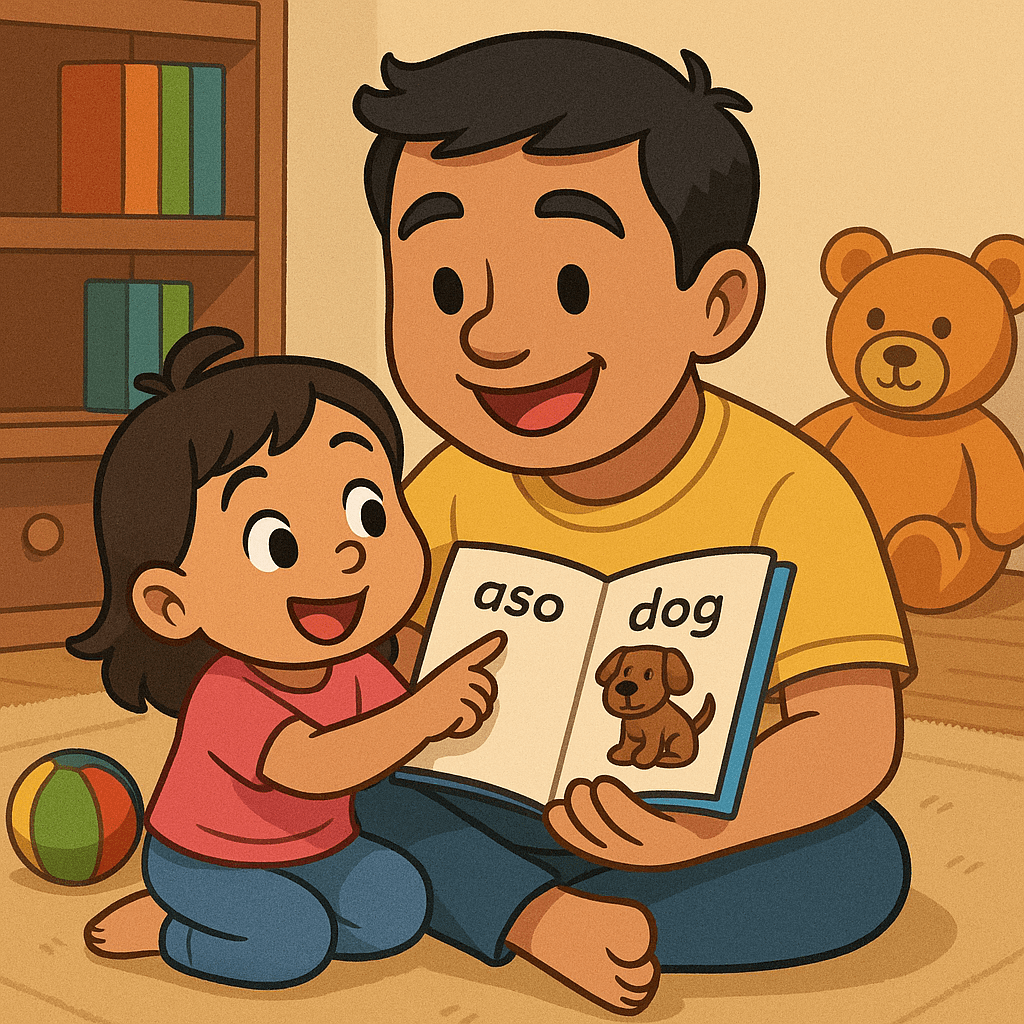
Our daughters were born here in the UK. So from day one, English na ang mundo niya. Sa TV, sa nursery, sa playground, lahat English. Pero sa bahay, iba. Kasi sa bahay, tatay niya ako.
One day, our eldest teacher at nursery told us something that stuck with me:
“Keep speaking to her in Tagalog at home. She’ll learn English here, but your native language she can only get from you.”
That hit me.
Kasi totoo. The world will teach her English. But only her family can teach her to be Filipino.
So we decided to raise her bilingual, Tagalog and English. Sounds simple, pero hindi madali. Minsan nag-mi-mix siya ng words. Minsan tatawa siya sa accent ko. Pero that’s okay. That’s part of growing up in two cultures.
1. One parent, one language
Ako English. Si misis Tagalog.
Pag si misis ang kausap niya, madalas English. Kahit minsan nagreklamo siya ng “Nanay, say it in English.” Nope. “Anak, Tagalog tayo pag magkausap.”
Pag si Tatay ang kausap niya, modalas English.
2. Use Tagalog in daily routines
We use Tagalog words during normal moments.
Pag kakain, “Hugas kamay.”
Pag aalis, “Magpaalam kay Nanay”
Pag may kalat, “Ligpit muna bago maglaro.”
These small phrases make Tagalog part of daily life, not a separate lesson.
3. Make Tagalog fun
We mix play and language. We watch Filipino nursery rhymes on YouTube, read bilingual storybooks, and make our own bedtime stories.
“Once upon a time, may batang mahilig sa tinapay…”
Funny, simple, but effective. The goal is to make her enjoy hearing and using both languages.
4. Don’t correct too much
Pag nagsalita siya ng English sa halip na Tagalog, I don’t say, “Mali ‘yan.”
I just respond in Tagalog.
Anak: “Tatay, I want potty.”
Ako: “Ah, gusto mo ng umihi or magpopoo?”
It’s gentle correction. No pressure, no shame.
5. Be patient
May mga araw na puro English siya.
May mga araw na bigla akong nagugulat kasi maririnig ko, “Tatay, pagod ako.”
It takes time. It’s not about speed, it’s about connection.
6. Explain why Tagalog matters
When she asks why she needs to learn Tagalog, I tell her, “Para makausap mo si Papalolo.”
Language is not just words. It’s memory, culture, and identity.
Ayokong dumating yung araw na hindi niya maintindihan ang sariling pamilya.
Dad Buhay Real Talk
Raising bilingual kids here in the UK is tricky. English is everywhere. Tagalog lives only inside our home. But it’s worth the effort.
Our kids will grow up speaking English confidently. But when they can say “Mahal kita” and know exactly what it means, that’s special. That’s home.
So if you’re a Pinoy parent abroad, keep speaking Tagalog. Kahit minsan may accent. Kahit minsan pinagtatawanan ng anak mo. Don’t stop. Because once they lose the language, they lose a piece of who they are.
And as their dad, that’s something I don’t want to happen.
That’s why I’ll keep talking to my daughter in Tagalog. Because the world will teach her English, but I’ll teach her to be Filipino.
– Until then…Love you, bye! That’s #DadBuhay.
 DadBuhay
Leave a comment