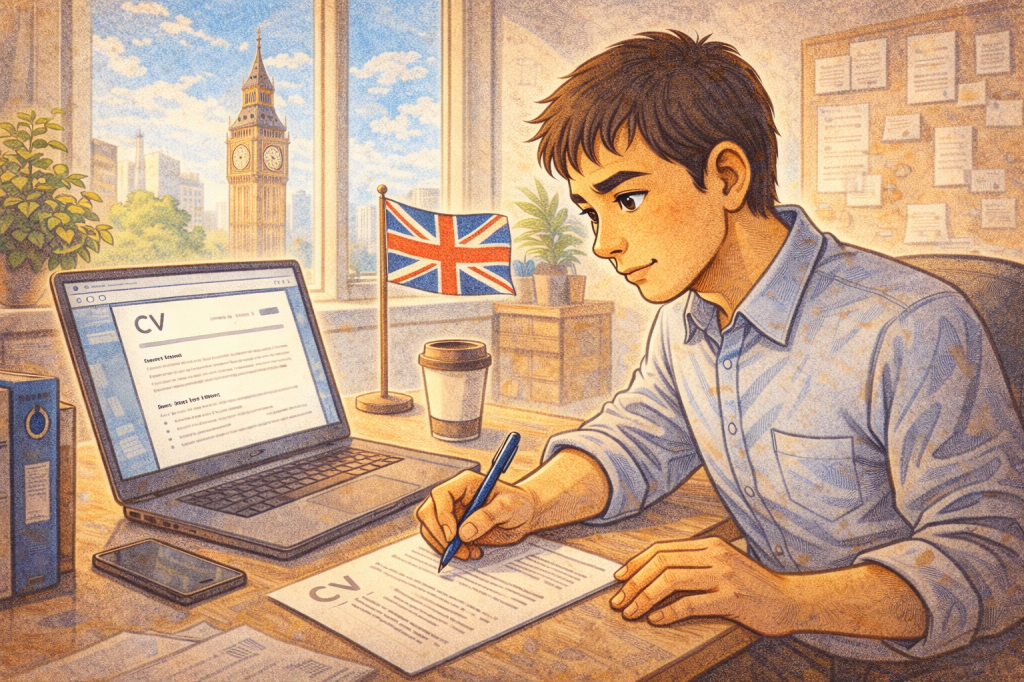
When you start applying for jobs in the UK, one of the first things you notice is that CVs here look very different from what many of us used in the Philippines.
The first time I prepared my CV for the UK job market, I realised quickly that some things we normally include back home are not expected here.
If you want your CV to stand out to UK employers, it helps to understand how the format works.
Keep It Simple and Professional
A UK-style CV is usually two pages long. Recruiters often review dozens of applications, so they prefer a CV that is clear, direct, and easy to scan.
Avoid long paragraphs. Use short bullet points that highlight your achievements and responsibilities.
The goal is not to list everything you have done. The goal is to show how your experience brings value to the employer.
Do Not Include Personal Details
One big difference is personal information.
In the Philippines, it is common to include details such as age, civil status, religion, and sometimes even a photo.
In the UK, these details are not required and usually avoided. Employers focus on your skills and experience, not personal background.
Normally your CV only needs:
Name
Phone number
Email address
Location (city is enough)
You do not need to include your full address, age, gender, or marital status.
Start With a Personal Profile
Most UK CVs begin with a short section called a personal profile or professional summary.
This is a short paragraph, usually three to four sentences, explaining who you are professionally and what you bring to the role.
For example, you might briefly mention your years of experience, your field of expertise, and the type of role you are seeking.
This section gives recruiters a quick overview before they read the rest of your CV.
Highlight Achievements, Not Only Duties
Another important difference is how work experience is written.
Instead of simply listing tasks, UK employers prefer to see results and achievements.
For example, instead of writing:
Responsible for managing projects.
You can write:
Managed multiple implementation projects across Europe, ensuring successful delivery within timelines.
This shows the impact of your work rather than just describing your responsibilities.
Structure of a UK CV
Most UK CVs follow a similar structure:
Personal details
Professional summary
Work experience
Education
Key skills
Certifications or additional training
Work experience usually appears in reverse chronological order, starting with your most recent role.
Keep It Honest and Clear
UK employers value honesty and clarity.
Do not exaggerate titles or responsibilities. Recruiters often verify employment history during background checks.
Clear and accurate information builds trust from the beginning.
Tailor Your CV for Each Job
One mistake many applicants make is sending the same CV to every company.
Instead, adjust your CV slightly for each role.
Highlight the skills and experiences that match the job description. This increases your chances of passing the initial screening.
DadBuhay Reflection
Moving to another country means learning new systems, including how job applications work.
Writing a UK-style CV is not about changing who you are. It is about presenting your experience in a way that employers here understand.
Many Filipinos bring strong skills, dedication, and work ethic to the workplace.
The challenge is simply translating that experience into the format expected in the UK job market.
Once you understand the structure, the process becomes much easier.
– Until then, love you bye! And that’s #Dadbuhay.
 DadBuhay
Leave a comment