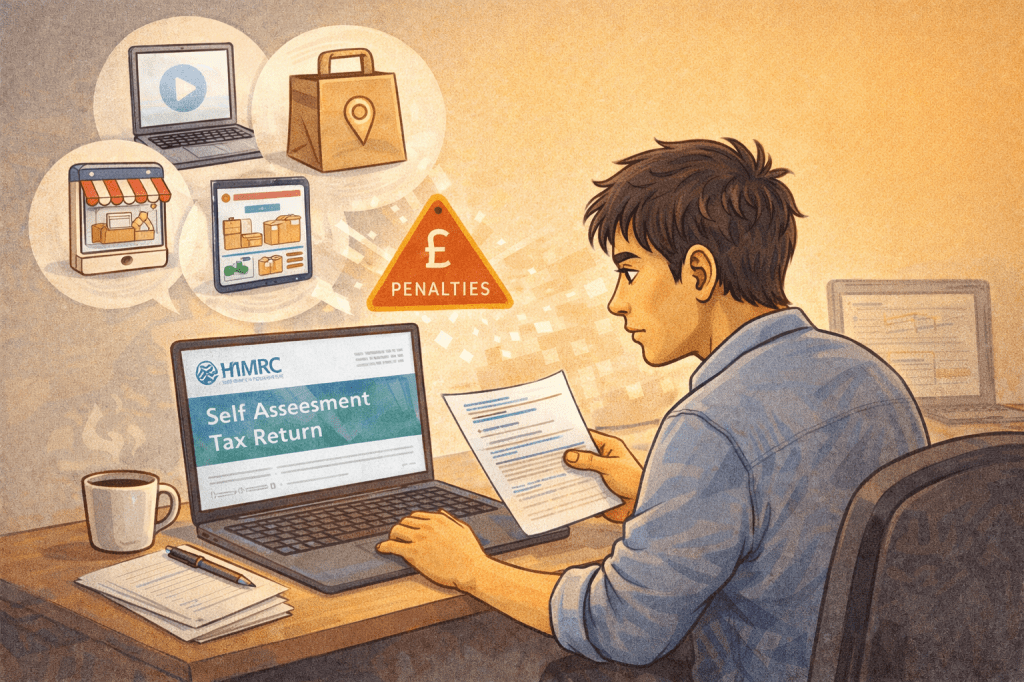
If you’ve read my previous post about almost paying £4,000 in tax penalties, you already know one thing.
Ignoring your tax responsibilities in the UK is expensive.
That experience taught me a lesson I won’t forget. Now, whenever I earn extra income outside my main job, I make sure I handle it properly.
Because in the UK, once you have extra income, HMRC expects you to declare it.
What Counts as Extra Income
Extra income is anything not taxed through your regular salary.
This includes:
side hustles freelance work online selling content creation rental income
Even small earnings count. If your side income goes above £1,000 in a tax year, you usually need to declare it through Self Assessment
That’s where many people get caught. Akala maliit lang, but it still needs to be reported.
Step 1: Register for Self Assessment
If it’s your first time, you need to register with HMRC.
Deadline:
5 October after the tax year you earned the income
You’ll get a UTR number, which you’ll use every year.
Step 2: Keep Track of Your Income and Expenses
This is where most people struggle.
You need to record:
how much you earned when you earned it any expenses related to that income
HMRC expects accurate records. If not, you can get penalties
From my experience, this is the part I wish I did better earlier.
Step 3: Fill in Your Tax Return Online
You file your return through the HMRC portal.
The system will guide you, but you’ll need to complete the right sections depending on your income.
For example:
employment income self-employed income other income like dividends or interest
If you have extra income, you’ll usually need to fill additional sections called supplementary pages
Step 4: Declare Your Extra Income Properly
Important point.
You declare:
total income before tax minus allowable expenses
You don’t just enter what’s left in your bank.
This is where mistakes happen.
And mistakes can cost money.
Step 5: Submit Before the Deadline
Deadlines matter.
31 January for online submission Same date for paying your tax bill
Miss it, and you automatically get a £100 penalty even if you owe no tax
This is exactly what I learned the hard way.
Step 6: Pay What You Owe
After submission, HMRC calculates your tax.
You may need to pay:
income tax national insurance possible payments on account
The amount depends on your total income, including your main job and side income.
DadBuhay Reflection
That experience where I almost paid £4,000 changed how I look at taxes.
Before, I thought:
“It’s just extra income. Maliit lang.”
Now I know.
There’s no such thing as “small” when it comes to HMRC.
If you earn extra, you declare it.
If you delay, you pay for it.
For migrant families like us, we work hard for every pound.
The last thing we want is to lose it because of penalties that could have been avoided.
So if you’re earning extra income right now, don’t wait.
Fix it early. File properly. Sleep better.
– Until then, love you bye! And that’s #Dadbuhay.
 DadBuhay
Leave a comment