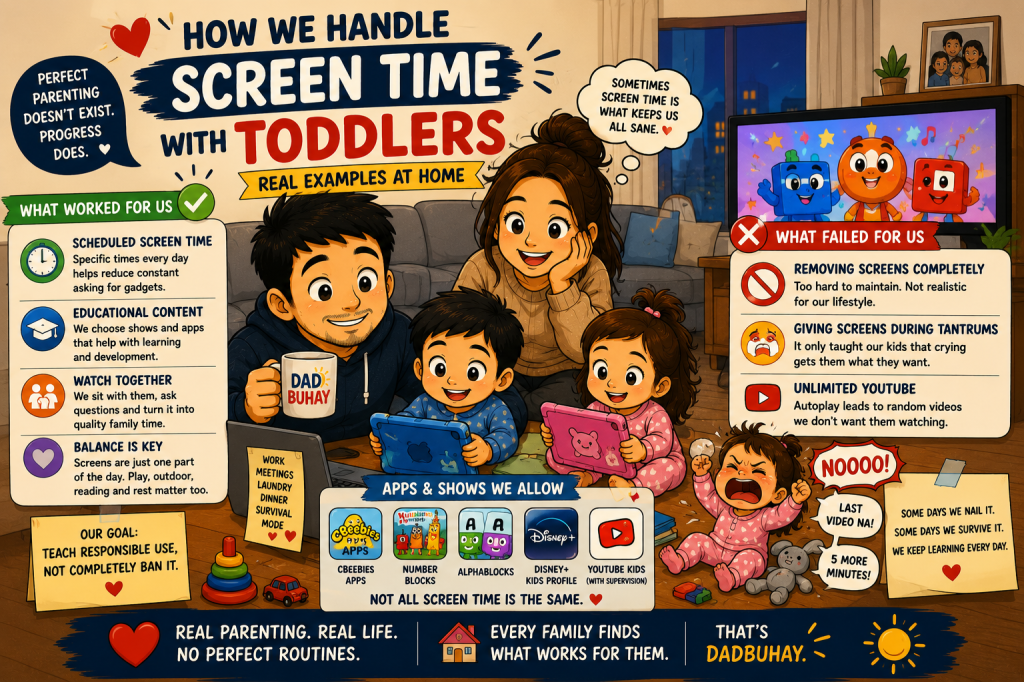
If you’re a parent of toddlers, you probably already know this already. Screen time is one of the biggest parenting battles at home. Before becoming a parent, I used to think our kids would barely use gadgets. I imagined a very controlled setup with minimal TV, no phones during meals, and mostly educational activities. Then real life happened.
Work meetings, cooking dinner, cleaning the house, and trying to survive the chaos of parenting completely changed my perspective. Sometimes screen time becomes the only way to get a few quiet minutes just to finish something important. And honestly, many parents probably experience the same thing but rarely talk about it openly.
At home, our approach to screen time changed many times. In the beginning, we tried being very strict. Minimal TV. Limited gadgets. Mostly educational videos only. It worked for a while, until the toddlers started becoming more aware and more attached to watching their favourite shows.
That’s when the tantrums started.
I think the hardest part of screen time is not giving it. It’s stopping it. The moment you say, “Okay, last video,” suddenly everything changes. Negotiations begin. Crying starts. We experienced all of that at home. There were days when ending screen time felt more stressful than the actual screen time itself.
Over time, we realised balance worked better for our family than extremely strict rules. Instead of completely banning gadgets, we focused more on structure and consistency. We started giving screen time during specific parts of the day, usually after nursery, during quiet afternoons, or sometimes on weekends when everyone was tired. This reduced the constant asking for phones or tablets throughout the day.
We also became more careful with the type of content they watch. We noticed a huge difference between educational shows and random autoplay videos online. Some of the apps and shows we allow at home are CBeebies shows like Numberblocks and Alphablocks, Disney+ kids profiles, and supervised YouTube Kids. Surprisingly, some of these genuinely helped with numbers, phonics, vocabulary, and even communication.
One thing that also helped us was watching together sometimes. Instead of using screens purely as a distraction, we tried turning some of it into family interaction. Asking questions, laughing together, or talking about what’s happening on screen made it feel less passive.
But honestly, not everything worked.
Trying to completely remove screens for long periods was difficult for us to maintain consistently, especially during busy workdays or bad weather weekends. Another mistake we learned quickly was giving gadgets immediately during tantrums just to stop the crying. The kids started associating emotional outbursts with getting screen time, which made things harder later.
Unlimited YouTube was also a mistake early on. One educational video suddenly turns into random chaotic content after autoplay takes over. After seeing that happen a few times, we became much stricter with supervision.
I think many parents quietly carry guilt about screen time, especially now when social media constantly shows perfect parenting routines and perfectly balanced family setups. But real life with toddlers is messy. Some days you manage screen time really well. Some days you are exhausted and simply trying to survive the day.
What helped us most was accepting that balance matters more than perfection. Parenting today is different from before because screens are already part of everyday life. For us, the goal is not pretending gadgets don’t exist. The goal is teaching our kids how to use them responsibly while still making time for conversations, play, outdoor activities, and real family moments.
And honestly, every family eventually finds their own version of what works.


Leave a Reply